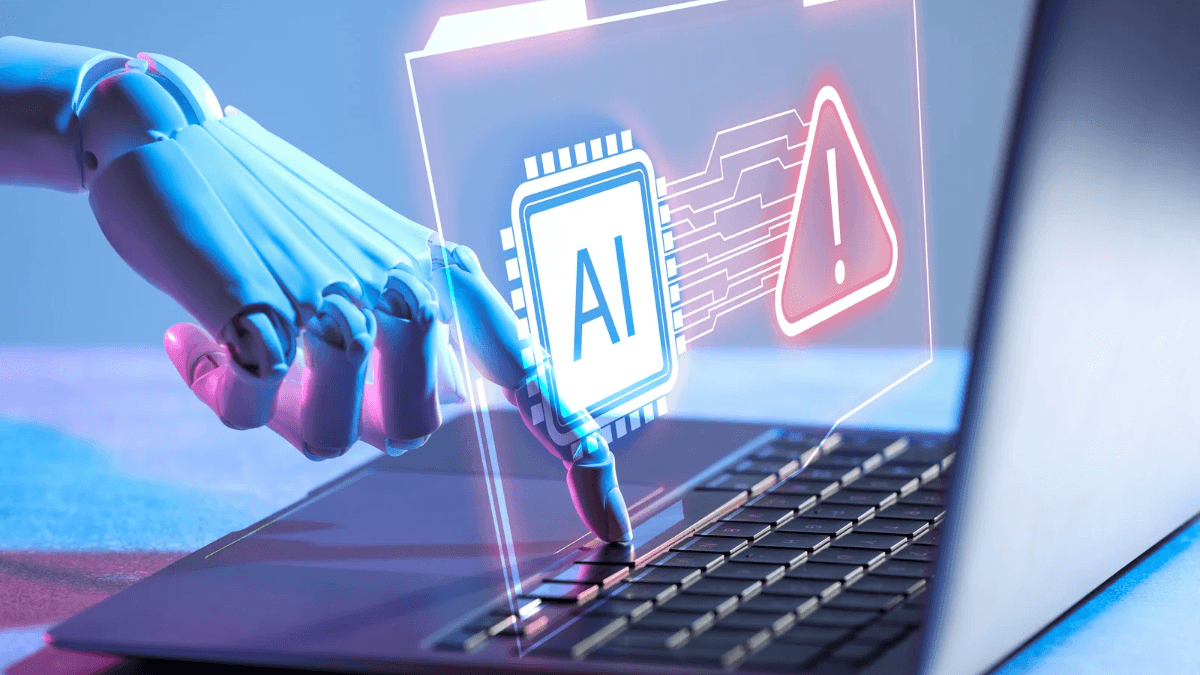
Artificial intelligence (AI) is transforming the way we learn, work, and interact with information. Today, a student can use a digital tool to answer a question, understand a concept, translate a text, or generate ideas in a matter of seconds. What once required consulting multiple sources can now be found in a single answer.
For families, this transformation raises important questions: Is it appropriate for children to use artificial intelligence? How can we prevent them from relying on it to complete their homework? What skills do they need to develop to use these tools responsibly?
The answer does not necessarily lie in banning technology, but neither is it necessary to incorporate it into all school activities. The real challenge of artificial intelligence in education is to ensure that it becomes a tool for learning, without replacing the processes that foster critical thinking, creativity, and autonomy.
At the British School of Cartagena (CBC), we recognize the importance of preparing students to navigate a world in constant transformation. This entails understanding that preparation for the future does not depend solely on familiarity with new technologies, but also on developing the skills necessary to use them with discernment, responsibility, and purpose.
What opportunities and challenges does artificial intelligence present in education?
Artificial intelligence offers new possibilities for enriching learning experiences. Some tools allow concepts to be explained in different ways, generate practice exercises, facilitate the translation of content, or support initial information searches. When used with a clear pedagogical purpose, they can complement teachers’ work and provide additional resources for students to explore specific topics in greater depth.
However, having immediate access to an answer does not mean that a student has learned. When a student receives an AI-generated explanation, they still need to understand it, connect it to their existing knowledge, and evaluate whether the information is correct. This distinction is fundamental, because learning is not just about obtaining results, but about knowing how to develop the reasoning processes that lead to them.
One of the main challenges is avoiding technological dependence. If a child uses artificial intelligence to solve every question or overcome every difficulty without first trying to understand it, they miss out on opportunities to practice skills such as research, problem-solving, and perseverance. Making mistakes, revisiting an idea, and exploring new alternatives are also part of learning, even when a digital tool can offer an immediate solution.
Another challenge is the reliability of the information. Generative AI systems can produce incorrect, incomplete, or biased responses, even when they are written in a convincing manner. Therefore, students need to understand that these tools are not infallible sources and that any relevant information must be verified using reliable references.
Digital safety is also a major concern. Sharing personal data, photos, family information, or school-related content on AI platforms can pose privacy risks. In addition, some tools may generate inappropriate content or feature interactions that do not align with children’s developmental needs. For this reason, their use should take into account the child’s age, access conditions, and adult supervision.
International organizations such as UNESCO and UNICEF have emphasized the need to approach artificial intelligence from a perspective centered on people and children’s rights. This involves capitalizing on its educational opportunities while protecting the privacy, safety, well-being, and development of those who interact with these technologies.
Why are critical thinking and autonomy essential in the age of artificial intelligence?
In a world where information is available almost instantly, one of the most important skills is learning to question it. Students need to distinguish between a convincing answer and a well-reasoned one, identify potential errors, and recognize when they should seek additional information. Artificial intelligence can provide answers, but understanding them, evaluating them, and deciding how to use them remains a human responsibility.
Critical thinking enables children to develop a more mindful relationship with technology. Instead of automatically accepting what appears on a screen, they can learn to ask themselves where the information comes from, what evidence supports it, and whether there are other perspectives. These skills are important not only for using AI tools, but also for interpreting news, participating in conversations, and making informed decisions.
Autonomy also takes on a new dimension. An autonomous student is not simply someone who can complete a task using any available resource, but rather someone who understands what they need to learn, recognizes when they need help, and can make decisions about their own learning process. In this context, using artificial intelligence responsibly means knowing when it can be useful and when it is important to make the intellectual effort independently.
Creativity faces a similar challenge. Although AI can generate text, images, and ideas, students need opportunities to imagine, experiment, and develop their own ideas. A tool can help them explore alternatives, but the ability to ask original questions, connect experiences, and develop a personal perspective remains essential to learning.
It is also important to consider social-emotional skills. Education takes place through human relationships that foster empathy, communication, collaboration, and conflict resolution skills. No technological tool can replace the experiences children need to have with their peers, teachers, and families in order to learn how to interact with others.
That is why preparing students for a future with artificial intelligence requires strengthening skills that go beyond technological knowledge. The ability to think for themselves, conduct research, make arguments, communicate, work in teams, and adapt to new situations will enable them to make the most of tools that will continue to evolve throughout their lives.
At CBC, our educational approach seeks to promote critical thinking, independence, and an international perspective on learning. These skills take on special importance in the face of technological advances, because they help students become not merely users of new tools, but individuals capable of questioning them, understanding their impact, and actively participating in the world they are transforming.
How can schools and families teach students to use artificial intelligence responsibly?
Education regarding artificial intelligence requires a collaborative effort between schools and families. It is not enough to simply be familiar with the available tools; it is also necessary to establish guidelines on when to use them, how they can be useful, and what their limitations are. These discussions should be tailored to the students’ ages and the skills they are developing.
In school, one of the challenges is to design learning experiences that value the process as much as the outcome. An activity can encourage students to conduct research, develop arguments, compare sources, or explain how they reached a conclusion. In this way, technology can serve as a complementary resource without replacing the student’s active participation.
Teachers play an essential role in this process. Their guidance helps students navigate the use of digital tools, identify comprehension difficulties, and foster discussions about the reliability of information, authorship, and academic responsibility. It is also important to establish clear expectations regarding which uses of AI are permitted in each activity and how to acknowledge its involvement when appropriate.
At home, families can start by talking with their children about the tools they’re familiar with and how they use them. Asking them what they find interesting, what information they’ve come across, and how they know if an answer is correct can create opportunities to develop their judgment without making technology a topic associated exclusively with restrictions.
Another strategy is to promote the principle of thinking first and using technology later. Before turning to a tool, children can try to formulate their own ideas, solve part of the problem, or identify what information they need. Then, with guidance and when appropriate for their age, they can compare their answers with other resources and reflect on what they have learned.
It is also necessary to set limits regarding privacy, screen time, and interaction with digital platforms. Children need to understand that not every tool is age-appropriate and that there are situations in which it is best to turn to an adult—especially when they need emotional guidance, encounter concerning content, or have questions about what information they can share.
Artificial intelligence will continue to evolve, and many of the tools we know today will be different in the coming years. For this reason, education cannot be limited to teaching how a specific platform works. Its purpose must be to develop skills that enable students to learn continuously, adapt to new contexts, and make responsible decisions.
At the British School of Cartagena, we believe in an education that prepares our students to understand the world and actively participate in it. When it comes to artificial intelligence, this means recognizing the value of innovation without losing sight of what makes learning meaningful: curiosity, independent thinking, human relationships, and the ability to transform knowledge into new possibilities.
Because the future of education does not lie in artificial intelligence thinking for our children, but in preparing them to think for themselves in a world where technology will be a part of their lives.